

Many homeowners don’t think much about their hot water system until it starts causing problems. However, when it comes time to replace an old system or install a new one. Many homeowners face the same question: Should you choose an electric heat pump hot water system or a traditional hot water system? The two types of hot water systems have similarities and differences in how they operate, cost, energy usage and benefits.
This guide helps to compare heat pumps with traditional hot water systems in the simplest way possible.
What Is an Electric Heat Pump Hot Water System?
The heat pump hot water system that runs on electricity works by using heat drawn from the air to heat water.
Unlike electric water heaters, which generate heat, the heat pump draws heat from the air into water contained in a hot water tank. The reason it is more efficient at using energy than other heaters is that it transfers heat instead of producing it. Thus, it consumes less electrical power compared to other heaters.
This makes heat pumps one of the most energy-efficient hot water solutions available today.
What Is a Traditional Hot Water System?
The traditional hot water system heats water directly through electricity or gas.
Examples of such systems include:
- Electric storage water heaters
- Gas storage systems
- Instant gas water heaters
Such conventional systems have been used in houses for many decades now and are well-known to most property owners.
Although the systems heat water effectively, they are less efficient compared to the newer heat pump systems.
How Do They Compare?
Let’s look at the key differences between the two options.
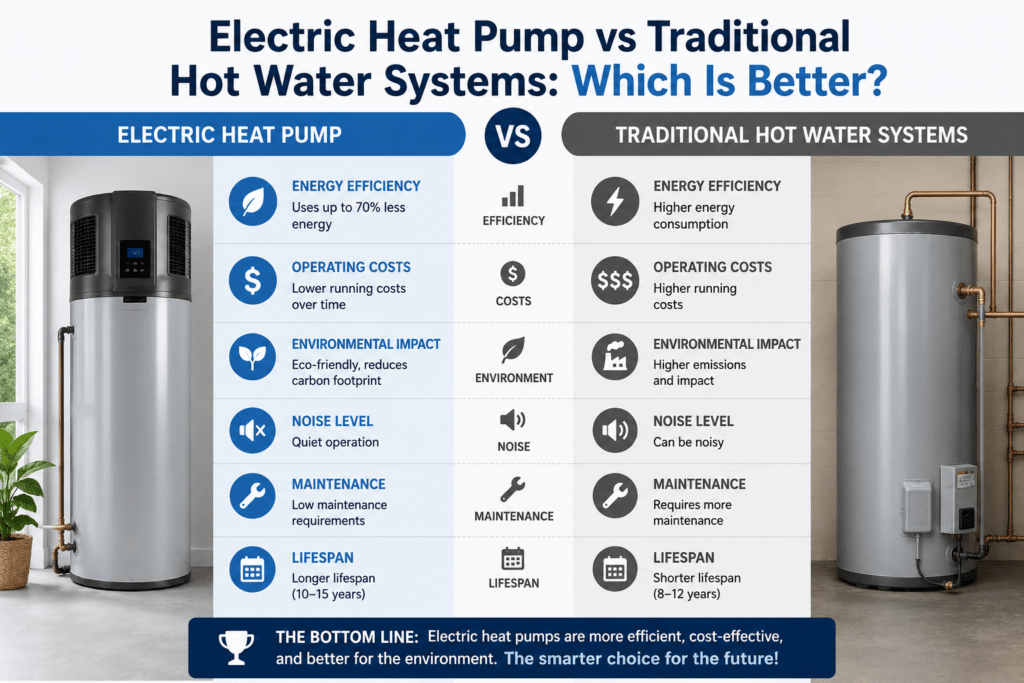
1. Energy Efficiency
Energy efficiency is one of the primary considerations for homeowners when choosing their hot water system.
The electric heat pump hot water system utilises heat energy from the air, which means it requires much less electricity to operate.
Traditional electric systems generate heat directly, which consumes more energy.
2. Running Costs
The purchase price of the system may be significant, but operating expenses should not be overlooked.
Due to low power consumption, heat pumps are often more economical to run in the long run than other systems.
Traditional electric water heaters can significantly increase household electricity bills, especially in larger families that use a lot of hot water.
3. Upfront Installation Costs
Traditional hot water systems often have lower upfront purchase and installation costs.
Heat pump systems can cost more initially because of their advanced technology.
However, the higher upfront cost is often balanced by lower operating costs over time.
4. Environmental Impact
Many homeowners want to lower their carbon footprint and make their homes eco-friendlier.
A heat pump hot water system powered by electricity extracts renewable heat from the surrounding air.
Traditional electrical systems consume more power and emit higher levels of greenhouse gases
Hot Water Performance
Both systems offer reliable sources of hot water if appropriately sized.
Modern heat pumps have been made to meet the needs of many families, regardless of their sizes.
Traditional heating methods also deliver reliable hot water and may restore the water’s temperature rapidly, depending on the model
Maintenance Requirements
Hot water heaters need regular maintenance to ensure that they function efficiently.
The Traditional systems have simple parts that make maintenance quite easy.
Electric heat pumps, on the other hand, have mechanical parts that require little maintenance once properly installed.
Compatibility with Solar Power
A number of Australian homeowners are using solar panels in order to lower their electricity bills.
An electric heat pump hot water system is extremely efficient when combined with solar energy since it consumes less energy to function.
This enables a household to use more electricity generated by solar panels instead of depending on the electrical grid.
Electric systems are also compatible with solar panels; however, they consume more electricity.
Long-Term Savings
While calculating the total cost of ownership, there are other things that have to be considered apart from the purchase price.
Though heat pumps are expensive to purchase, they can save a lot of money due to low operational costs.
Most people are able to recover the extra money spent due to low power bills.
Quick Comparison Table
Feature | Electric Heat Pump Hot Water | Traditional Hot Water System |
Energy Efficiency | Excellent | Moderate |
Running Costs | Low | Higher |
Installation Cost | Higher | Lower |
Environmental Impact | Lower | Higher |
Solar Compatibility | Excellent | Good |
Long-Term Savings | High | Moderate |
Hot Water Supply | Reliable | Reliable |
Why Professional Installation is Important
Whatever your choice, proper installation is crucial.
An expert installer will be able to:
- Suggest the right size of system
- Install safely
- Maximise efficiency
- Enable efficient operation of the system
Poor installation results in lower efficiency and increased costs.
Final Thoughts
When evaluating the efficiency of an electric heat pump hot water system in comparison to conventional hot water systems, it can be determined that the electric heat pump is usually more efficient, less costly to use, and more cost-effective. Although the traditional hot water systems may seem to be cheaper in terms of the initial investment, heat pumps may turn out to be a more economical and eco-friendly alternative. If you need an energy-saving hot water option, then you should consider consulting with Active Energy group in order to make the right choice. With their help, you can enjoy reliable hot water while keeping your energy costs under control.
Frequently Asked Questions
Is an electric hot water system cheaper to run than a traditional electric water heater?
Yes. Heat pumps use significantly less electricity because they transfer heat from the air rather than generating it directly.
What are the benefits of using a heat pump hot water system with solar panels?
A combination of a heat pump hot water system with solar panels may help to save on electricity bills, increase the use of renewable energy and improve household efficiency.
Are electric heat pump hot water systems worth the extra cost?
For many homeowners, yes, it is. The lower running costs can help offset the higher upfront investment over time.
Do heat pumps work during winter?
Yes. Modern heat pump systems are designed to operate efficiently even in cooler temperatures.
How long does a heat pump hot water system last?
With proper installation and maintenance, many heat pump systems can provide reliable performance for 10 to 15 years or more.